

Can Cotton-Hemp Yarn Make 120–200 TC Bed Linen?
Can cotton-hemp yarn make 120–200 TC bed linen?+
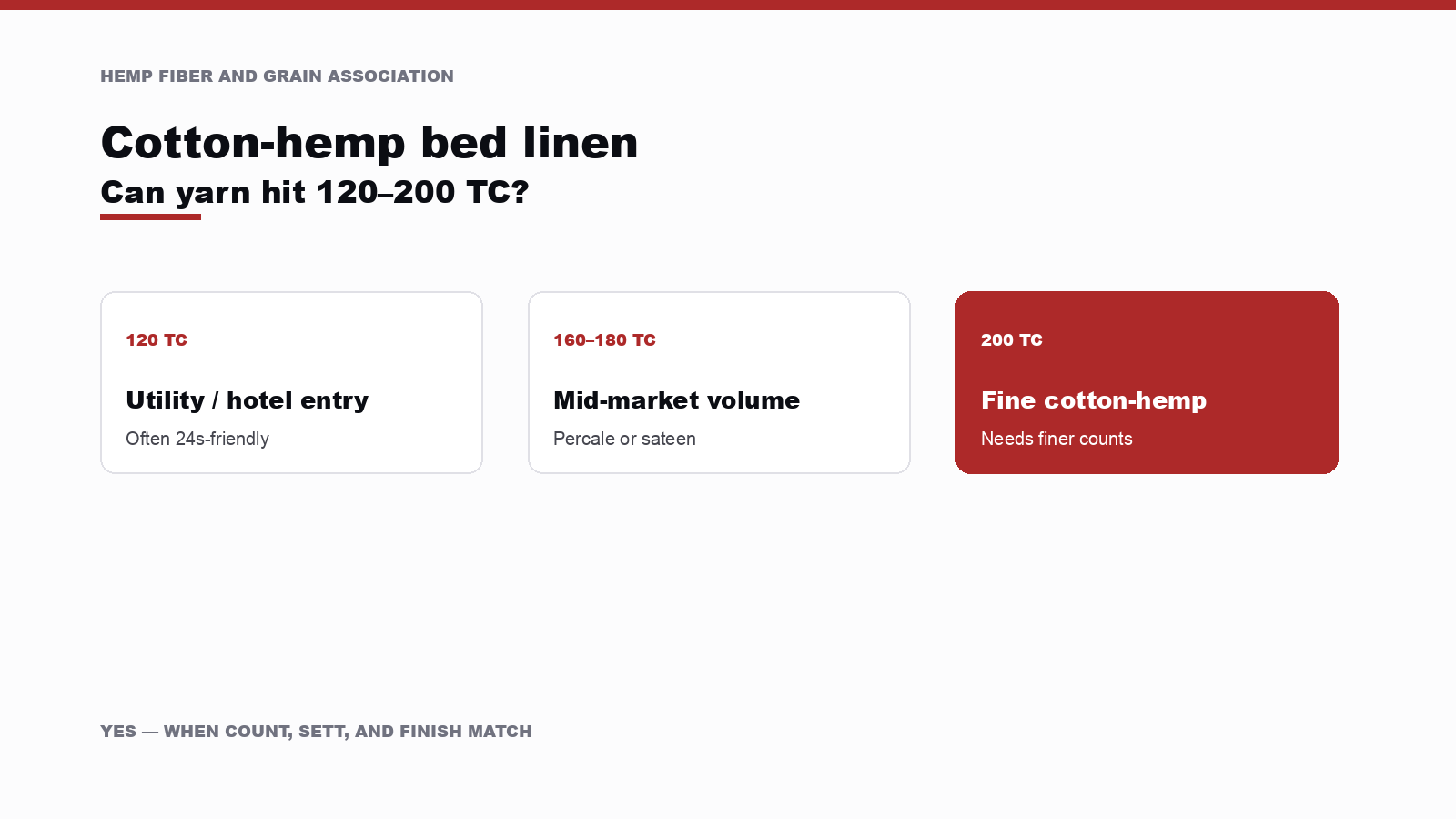
Yes. Cotton-hemp yarn can weave 120–200 thread-count bed linen when yarn count, weave sett, and finishing match sheeting — finer counts toward 38s/1 reach the upper end of that band more comfortably.
Yes. Cotton-hemp yarn can make 120–200 thread-count (TC) bed linen when the yarn count, weave sett (ends and picks per inch), and finishing are designed for sheeting — not when a random apparel cone is dropped onto a loom. Thread count is warp plus weft yarns per square inch of fabric. Mid-market sheeting at 120–200 TC is a realistic band for cotton-hemp blends using counts in the mid-to-fine range (including constructions fed by yarns such as 38s/1 and related cotton-hemp), while coarser 24s/1 programs more often land toward the lower end of that band or in heavier utility sheeting.
US-grown industrial hemp in these sheets is still Farm Bill fiber at or below 0.3% delta-9 THC — not marijuana. The acre that supplies sheeting-grade bast is the same textile acre described in growing hemp for textile yarn, graded under the HFGA US Hemp Textile Standard.
Why Cotton-Hemp Works for 120–200 TC Bed Linen
Cotton sheeting already owns 120–200 TC as a volume consumer band: durable enough for hotels and homes, fine enough to feel like a step up from utility muslin, without the marketing theatre of inflated 800+ TC claims. Adding hemp brings strength, a drier hand for many wearers, and a plant-based story that sits beside home-goods uses for US hemp textiles.
Cotton-hemp yarn for bed linen succeeds when both fibers are prepared for the same weaving system. That often means cottonized or cotton-system hemp spun alone or blended — including premium cotton routes discussed for Supima® blends. Percale and sateen constructions both appear in this TC window; percale reads crisp, sateen reads smoother. Neither forgives dirty fiber.
Licensing and production reporting remain USDA AMS and USDA NASS. Seed lots should be AOSCA-aligned through certified seed introductions.
What It Takes to Hit 120–200 TC with Cotton-Hemp Yarn
Three dials: yarn count, sett, finish.
Yarn Count Must Match the Thread-Count Target
Higher TC needs more yarns per inch, which usually means finer yarn or multi-ply constructions. Finer cotton-hemp counts (toward 38s/1 and above) reach 160–200 TC more comfortably; coarser 24s/1 cotton-hemp more naturally supports ~120–160 TC or heavier sheetings depending on sett. Forcing a coarse yarn into a high TC by packing the loom creates stiff, weak fabric. Match count to TC before promising a SKU — and use the GSM guide for 24s/1 and 38s/1 so weight and hand stay in range for bedding.
Sett and Weave Decide Whether TC Feels Like Linen
Percale’s plain weave and sateen’s float structure distribute the same TC differently on the skin. Cotton-hemp bed linen at 180 TC in percale will not feel like 180 TC sateen. Mills in established sheeting regions — often along the USA → India → USA processing path — already know those constructions; what they need from US hemp is consistent grade so every warp beam behaves.
Finishing Protects Hand Without Hiding Poor Fiber
Enzyme washes, calendering, and softener packages can improve cotton-hemp sheeting hand, but they cannot erase residual shive that prints through as grit. Textile-grade cleanliness at the bale is still the cheapest “finish.” The decorticated fiber standard keeps off-grade material from being sold into a sheeting program that will fail inspection.
What 120–200 TC Cotton-Hemp Means for US Hemp Acres
Bed linen is a volume destination when it works — and a reputation risk when it does not.
Sheeting Programs Buy Consistency by the Container
Hotels and big retail replenish. They need repeatable TC, GSM, and shade — which means contracted textile fiber, not opportunistic straw. Growers enter through sell your crop and buyer maps; brands sourcing finished goods still depend on the same upstream grades. Pricing references keep the acre honest against corn and soybean.
Home Textiles Are a Named End Use, Not Leftovers
Position sheeting as a planned grade lane, the way athletic knits are planned for polyester replacement. The hemp fiber market outlook and hemp fiber association guide exist so home-textile demand pulls the right acres — TX-A style blend fiber — instead of dumping coarse lots into “bedding” as a disposal channel.
Keep Claims Auditable from Field to Fitted Sheet
A “US hemp / cotton 200 TC” label should survive a buyer’s audit: seed lot, licence, grade, yarn count, and mill. What Is HFGA and the Imperium registry model show how named fiber products attach to standards. US exports cover the trade path when spinning or weaving sits offshore.
Cotton-hemp yarn can make 120–200 TC bed linen. The yes depends on count, sett, finish — and on US hemp that was grown and graded for textiles before anyone printed a thread count on a package.
FAQ
Quick answers from this article.
What does thread count mean on cotton-hemp bed linen?+
Thread count is warp plus weft yarns per square inch. 120 to 200 TC is a mid-market sheeting band, not an inflated 800-count claim.
Which yarn count reaches the top of 120 to 200 TC?+
Finer cotton-hemp counts, toward 38s/1 and above, reach 160 to 200 TC more comfortably. Coarser 24s/1 more often supports about 120 to 160 TC or heavier sheeting.
Do percale and sateen at the same TC feel the same?+
No. Percale's plain weave reads crisp and sateen's float reads smoother. Cotton-hemp bed linen at 180 TC percale will not feel like 180 TC sateen.
Can finishing hide dirty cotton-hemp fiber in a sheet?+
No. Enzyme washes and softeners can improve hand, but they cannot erase residual shive that prints through as grit. Clean textile-grade fiber at the bale is still the cheapest finish.
Is US hemp in these sheets marijuana?+
No. The bast is Farm Bill industrial hemp at or below 0.3% delta-9 THC, graded for textiles before anyone prints a thread count on a package.